pokaż listę kategorii

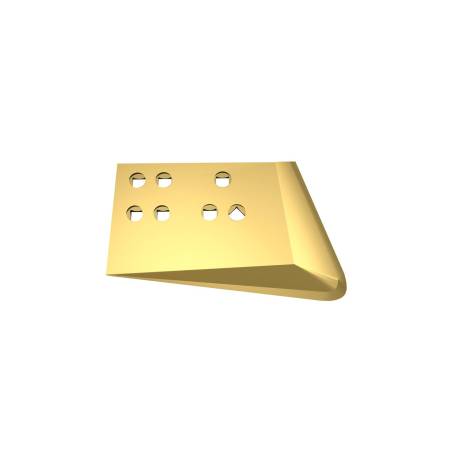
Cutting edges to bulldozers

Cutting edges Bulldozer blades are essential components of construction machinery responsible for effectively moving and leveling materials such as soil, debris, sand, gravel, or snow. These key elements play an important role in industries such as construction, roadwork, earthmoving, and mining, where precision and efficiency are crucial. A properly selected bulldozer blade directly impacts the quality of work performed, the efficiency of the machine, and operating costs.


Types of bulldozer blades

The selection of an appropriate blade for a bulldozer affects the machine's work efficiency and its ability to operate in various terrain conditions. There are several main types of blades, which differ in design and application:

  1. Straight blade (S-blade) This is the most basic model, with a simple construction and no side wings. It performs well in tasks requiring precision, such as leveling ground or removing obstacles. Its limitations include smaller capacity and a tendency to scatter material to the sides while moving.
  2. Universal blade (U-blade) It is characterized by a strong curvature and high side wings, which allows for the transport of large quantities of material over long distances. It is most commonly used in earthworks, including forming embankments and scraping loose aggregates.
  3. Semi-universal blade (SU-blade) It is a compromise between a simple and a universal version. Its shape allows for efficient movement of material while maintaining good control over it. Most commonly used in construction and road works, where both precision and efficiency are important.
  4. Angle blade It can be adjusted at different angles relative to the machine, which facilitates pushing material to the sides. It is often used for terrain shaping, snow removal, or constructing drainage ditches. However, the lack of side walls means it is not suitable for tasks that require keeping the material within the blade.
  5. Multi-purpose blade (PAT blade) The most advanced model allows for adjustment of tilt angle and height in multiple planes. This enables the operator to tailor its settings to various working conditions, making it ideal for precise terrain profiling and final finishing work.

What should be considered when choosing a bulldozer blade?

Selecting the right blade for a bulldozer is a crucial element that affects the machine's efficiency, durability, and operational costs. It is important to consider several key factors that will allow you to choose a product best suited to specific working conditions.

  • Material of construction - High-quality material is the fundamental parameter that affects the lifespan of the blade. The most commonly chosen alloys are Hardox steel (from Hardox 400 to Hardox 500) and Boron steel, which provide exceptional abrasion resistance. Depending on the intensity of work and terrain conditions, it is worth adjusting the material to specific requirements. Cutting edges Hardox 500 steel will perform excellently in extreme conditions, such as quarries or mines, where the material is exposed to intense abrasion.
  • Material hardness - The hardness of the plowshare, expressed in units HB (Brinell Hardness), is of great importance for its durability. A blade with higher hardness will be more resistant to wear, which translates into a longer lifespan, but it may also be more prone to cracking under extreme conditions. Sustainable choice of hardness is therefore essential – in areas with less intensive use, a blade with a hardness of 400 HB is sufficient, while in extreme conditions, it is worth considering steel with higher hardness, e.g. Hardox 500.
  • Thickness and length of the plowshare - Proper Thickness and length of the plowshare dependent on the type of work being performed and the model of the bulldozer. A blade that is too thin may wear out quickly, while one that is too thick may increase the machine's load, affecting its efficiency. It is worth choosing products that are exactly matched to the machine model to ensure its best performance.
  • Type of mounting - A key element in choosing a blade is also type of mounting, which must be compatible with the bulldozer's mounting system. Selecting the appropriate mounting ensures Safe and stable installation, which affects the accuracy of the machine's operation and minimizes the risk of damage.
  • Type of work - The work performed by a bulldozer greatly influences the choice of blade. In the case of tasks involving the shaping of embankments or collecting loose materials, certain blades work perfectly. cutting edges Universal (U-blade) or Semi-universal (SU-blade). On the other hand, in the case of precision finishing works for land shaping, it is worth choosing a blade Multifunctional (PAT blade), which allows for the adjustment of the angle and height, thus offering greater flexibility in operation.

Cutting edges to bulldozers in Glimat's offer

The Glimat offer includes a wide range of high-quality blades for bulldozers from leading manufacturers such as Caterpillar, Komatsu, Liebherr, Volvo, CASE, and many others. Our cutting edges They are designed with exceptional durability and strength in mind, making them reliable even in the most demanding working conditions. Each blade in our offer is characterized by excellent wear resistance, ensuring long-lasting use even with intensive operation. This means parts need to be replaced less frequently, which helps to reduce operational costs.

Benefits of choosing Glimat plowshares:

  • High quality materials – our cutting edges are made of Hardox wear-resistant steel and boron steel, which ensures their exceptional durability.
  • Precise execution - the perfect match to the technical specifications of the machines ensures easy installation and efficient operation.
  • Wide range - we have cutting edges to the most popular bulldozer models, such as the Caterpillar D6, Komatsu D65, Liebherr PR 736, CASE 2050M, Volvo D71, and others.
  • Professional consulting – our experts will help select the appropriate plowshare for your machine and specific working conditions.

How to extend the lifespan of a plowshare?

To maximize Extend the service life of the blade, it is crucial to follow several important rules. Regular monitoring of consumption the key – it is worth regularly checking the condition of the plowshare to identify worn segments and replace them in time. This helps prevent further damage to other components. Another factor that affects durability is Selection of the appropriate material. For standard working conditions, such as earthworks or construction, an appropriate option would be Boron steel, whereas in more challenging conditions, such as quarries or work in extreme temperatures, it is worth choosing Hardox 500 steel, which offers exceptional abrasion resistance. Also, avoid excessive burdens - Aggressive use can accelerate the wear of the plowshare, so it is worth adjusting the intensity of work to the machine's capabilities, ensuring that it is not overloaded during operation.

Innovative technologies in the production of bulldozer blades

Modern cutting edges Dozers are increasingly using advanced metal processing technologies that significantly enhance their durability and work efficiency. An example is the solutions implemented by global manufacturers, such as induction hardening of cutting edges. This process allows for achieving a hardness of up to 600 HBW on the edge of the blade itself, while the rest of the element retains greater flexibility, minimizing the risk of cracking.

Another innovation is cutting edges Bimetallic, which combine two different types of steel:

  • The outer layer is made of a wear-resistant alloy (e.g., Hardox 500).
  • A core made of spring steel that absorbs vibrations and reduces the risk of breaking the blade under heavy load.

One of the leading providers of these modern technologies is Black Cat Blades, whose cutting edges you will find in Glimat's offer.

FAQ

1. How often should the blade be replaced in bulldozers?

It depends on the intensity of use and the type of soil. Under light conditions, a plowshare can last even several thousand hours of work, while in difficult conditions (quarries, mines), replacement may be necessary every few hundred hours.

2. Does cutting edges Are bulldozers universal?

No, cutting edges They differ in length, thickness, hardness, and method of attachment. It is important to choose the appropriate model for a specific machine.

3. What is the best material for a plowshare?

The best choice is Hardox steel (from Hardox 400 to Hardox 500) or boron steel. Hardox 500 will perform well in extreme conditions where maximum abrasion resistance is crucial.

4. Is it worth investing in cutting edges Segmented?

Yes, if you want to reduce operating costs. Segmental cutting edges They allow for the replacement of only the worn parts, which is more economical than replacing the entire blade.

5. What bulldozers do they operate? cutting edges from Glimat's offer?

We offer cutting edges to bulldozers from Caterpillar, Komatsu, Liebherr, CASE, Volvo, and many other brands. If you're unsure which model to choose, contact our advisor.

Most Searched Product Groups