 English
 Polski

Your cart
There are no more items in your cart


 MAJSTER RADZI!
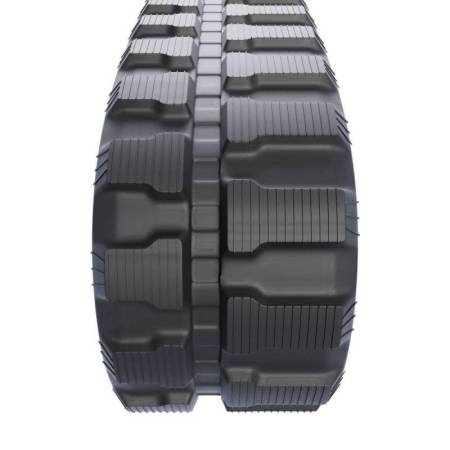



Tracked machines are often used for construction work. Their advantages include high mobility and durability. However, certain components of these parts may require periodic replacement. We have prepared a comprehensive offer of rubber tracks for mini-excavators.
Pomożemy Ci dobrać pasującą część!


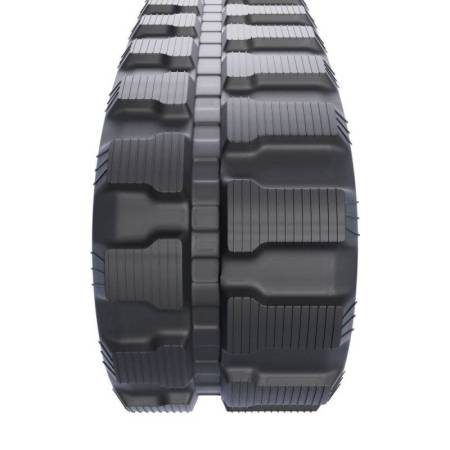
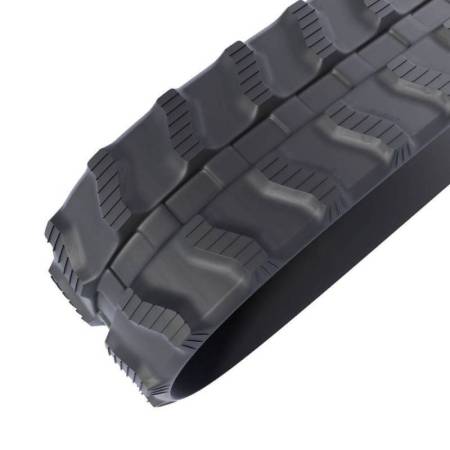


We offer products in various sizes and track widths – from 180 mm to 900 mm. This allows them to be adapted to almost any model of construction machinery available on the market today. We offer rubber tracks with both short and long pitch links. Each model features a large number of steel reinforcements that ensure stability and resistance to cracking. At the same time, each rubber track It perfectly minimizes vibrations associated with the machine's operation. Our tracks also provide excellent traction on various terrains, including mud, soil, sand, clay, gravel, and asphalt. The most advanced technologies have been used in their production, making them very efficient.
Until recently, all construction machinery used tracks made entirely of steel. The interconnected metal plates provided durability, but they also had numerous drawbacks. Rubber tracks are designs that allow for the elimination of most of the disadvantages known from steel constructions. They are readily used in various construction and field work, and their dimensions allow them to be applied in all the most popular construction machines.
Rubber tracks are manufactured somewhat differently from traditional steel tracks. Their production technology is more akin to the molding of car tires. The inner layer of rubber tracks is made up of a flexible steel mesh. This mesh connects all the structural elements of the track for a mini-excavator, which include steel cords and metal bearing plates. The quality of this mesh determines the stability of the connection; however, this solution is less prone to failure compared to the interconnected steel links.
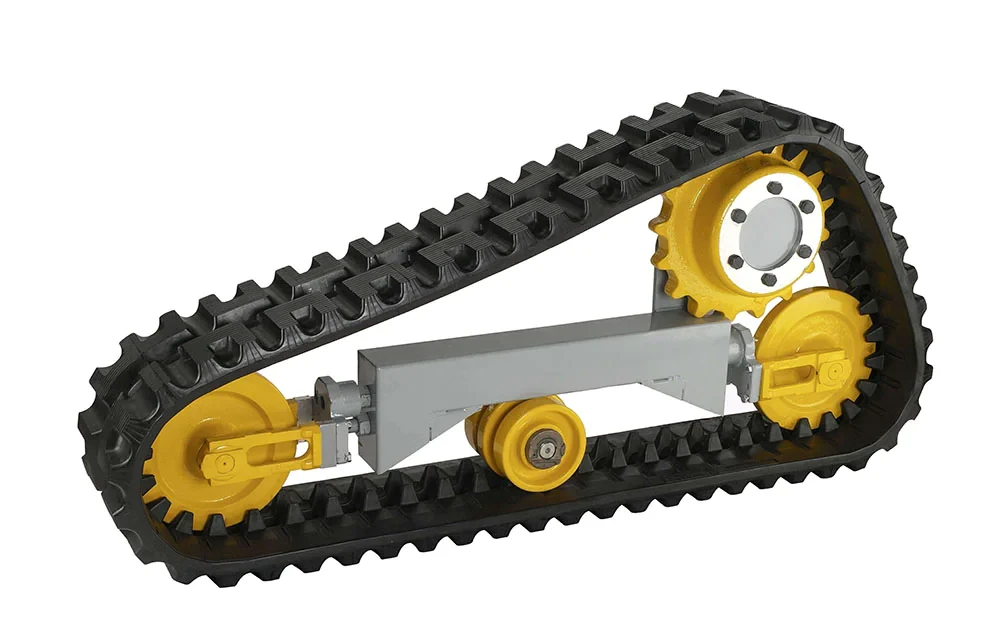
The outer layer of rubber tracks is the actual coating made from polymer blends. In the case of mini excavators, tracks are made from rubber with significant hardness. Its load-bearing capacity is adjusted to the weight of the machine, and additionally, the rubber is resistant to chemicals encountered on construction sites. To ensure stability of movement, the rubber tracks have a tread applied. The universal grooves work well on dry and wet flat surfaces, as well as on uneven terrain.
Mini excavators are part of construction machinery used in all construction work. They are used for renovations, demolitions, and the construction of new structures. Similarly, rubber tracks can also be used in any of these tasks. There are no obstacles to using them for roadworks or construction work. Their durability and properties ensure that these constructions perform well in all conditions. This is also influenced by the easy ability to adjust the parameters to the type of machine.
However, there are several industries where a mini excavator equipped with rubber tracks will perform better than in others. The most important include all work conducted on hardened surfaces. Rubber maintains good traction on asphalt, cobblestone, or paving slabs. Additionally, it does not damage the surface, as is the case with steel tracks. Tracks with a large number of links, such as those used in 230x48x68 rubber tracks, will move efficiently even over uneven surfaces.
Another area where rubber tracks can be utilized is all kinds of indoor work. The smallest mini excavators are capable of fitting through doorways and conducting demolition work inside halls, warehouses, or other buildings. These vehicles can encounter not only leveled floors but also adjacent excavations or rubble. It is in these areas with varied structures that appropriately selected rubber tracks for mini excavators will ensure easy maneuverability and efficient movement.
Rubber tracks can also be used for work in more irregular, bumpy, or rocky terrain. In these conditions, it is worth using rubber tracks with a small number of links but very versatile, such as the popular 230x72x47 accessories for mini-excavators. With the appropriate treads, the tracks can also be used for excavations for fence construction, drainage ditches, and other work conducted near buildings where access is highly variable.
The use of rubber tracks is less burdensome compared to accessories made of steel. However, during work, one must not forget to check this part of the vehicle. First and foremost, before starting work, the tension should be checked, as even in mini excavators, the tension wheels can become loose or the track itself can stretch. When adjusting, one should not overdo it and tighten the rubber too much. This can lead to distortion and faster wear of the rubber tracks for mini excavators. The optimal tension is 10 to 20 mm, and it is worth checking this.
When using new rubber tracks, attention must also be paid to the behavior of accessories during operation. It is crucial not to forget that the size of the rubber track should be appropriately matched to the size of the mini excavator. The most important parameter is the width. For larger machines, tracks measuring 400x72.5x74, which are among the widest, will be suitable. On the other hand, the smallest mini excavators should have rubber tracks measuring 230x96x33. If the operator notices that the track does not fit the drive sprocket or rubs against the housing, it is better to immediately stop the work and replace the equipment.
When using it, it's worth paying attention to how it behaves. rubber track when moving on a given surface. There is a possibility to exchange the track and adjust its construction to the surface characteristics. In this case, attention should be paid to the number of links (this value is specified by the last parameter on the track designation). For work on very uneven surfaces, where considerable stabilization is needed, rubber tracks for mini-excavators with a small number of links are used. An example is the 230x96x31 track, which is used for the most difficult terrain. On the other hand, rubber tracks 230x48x68, which have more than twice the number of links, are better suited for even surfaces.
The replacement of tracks in mini excavators is carried out not only in the case of wear of old accessories but also when there is a change in the characteristics of the terrain on which the vehicle operates. Installing rubber tracks is not easy and often requires additional machinery. Therefore, it is always worth preparing for this task diligently.
Difficulties may arise when removing the current rubber tracks. For larger machines and wide tracks, a second excavator is necessary to help slide off the element. For smaller vehicles, instead of engaging a second excavator, a crowbar or pipe is sufficient. Of course, all work should begin after positioning the excavator on its side and loosening the screw securing the tension wheel.
If the tires have smoothly come off the excavator, we should not encounter any problems when installing the rubber tracks. It's worth checking the dimensions of the track again, particularly its length and width. Once installed, all that's left is to tighten the tensioning bolts, and the machine can be set upright again.
Over time and with continued work, rubber tracks will wear out. Rubber wears down faster on asphalt and rocky surfaces than steel plates. Therefore, it is necessary to conduct quality checks of the tracks more frequently and make any necessary replacements. Only high-quality rubber tracks for mini excavators that are maintained in good technical condition will be able to ensure safe operation.
The wear on rubber tracks is similar to that of car tires. One should check if the rubber is starting to crack on the tread. Uneven wear of the tread may occur, which will be visible to the naked eye. If the wires from the structural mesh, which is the first layer of the track, start to protrude through the rubber, replacement should be done as soon as possible. Replacement will also be necessary if there are significant gaps visible in the rubber tracks or if the equipment is deformed.
Rubber tracks for mini-excavators have numerous advantages, which make operators prefer them over traditional steel ones. The most important of these is the lower weight, which translates into a lighter overall weight of the construction machine. Rubber equipment is particularly valuable when the mini-excavator operates in irregular and marshy terrain.
The numerous advantages of rubber tracks are particularly evident during work on asphalt surfaces. In such conditions, operators appreciate the greater control over the machine resulting from better traction. Additionally, the maneuverability of mini-excavators is improved, allowing work in narrow areas. Well-selected rubber tracks enhance the machine's steerability in difficult weather conditions.
The rubber layer on the tracks also provides greater comfort for the operator and people nearby the construction site. The rubber dampens the vibrations caused by the engine, making them almost imperceptible in the operator's cabin. Fewer steel components and the lack of vibrations mean that rubber tracks emit less noise. This is good news for those working near the machine. Lower noise emissions also offer more opportunities for work in urban areas or places that particularly require silence.
FAQ
Rubber tracks fit most mini excavator models due to the variety of available sizes. However, it is important to precisely match the width, length, and number of links to the machine's specifications.
For work on hard surfaces, such as asphalt or cobblestones, rubber tracks with a greater number of links, such as the 230x48x68 model, will work best. They provide better traction and do not damage the surface.
The wear of rubber tracks is manifested by tread cracking, uneven wear, or the steel mesh piercing through the rubber. If there are noticeable deficiencies or the track rubs against the casing, it should be replaced as soon as possible.